What Parents Told Us About Barriers to Student Behavioral Health Services

A student receiving behavioral health services
Parents and caregivers play an essential role in children's mental health. In most cases, they decide whether a child can receive behavioral health services by providing consent, and they often shape how young people understand mental health, seek support, and stay engaged in care. Research shows that when families are meaningfully involved, behavioral health services are more likely to be effective and have lasting impact.
We set out to explore this critical connection by asking: How can schools and providers build caregiver trust and engagement, so students get the behavioral health support they need?
To answer that question, The L.A. Trust, through the Youth Mental Health Collaborative and with funding from The California Endowment, partnered with Inner City Struggle to conduct focus groups with Los Angeles Unified parents. Participants shared their experiences navigating school-based and school-linked behavioral health services, the challenges they encountered when seeking support, and what would help them feel more informed, respected, and confident receiving care.
The conversations revealed five interconnected barriers to accessing services. Some were practical—complex paperwork, difficulty navigating multiple systems, long wait times, and unclear communication. Others were rooted in trust, including concerns about stigma and confidentiality. Perhaps the most striking finding was the fear that seeking behavioral health services could result in child and family services involvement or even loss of custody. Whether based on their own experiences or people they know, these fears were real and influential in their decision-making.
As one parent shared: "I recommended therapy to someone who asked me for information. I had my children in therapy, and I am still in therapy. Someone who saw how my situation has been progressing and that my children are fine was interested in therapy, and now they are taking her children away."
These concerns reflect a broader history in which low-income communities and communities of color have experienced disproportionate surveillance and intervention by child welfare systems, creating understandable skepticism toward behavioral health institutions. While behavioral health services can be life-changing for children and families, trust cannot be assumed—it must be earned. Improving access requires more than ensuring availability; it means acknowledging families' legitimate concerns and building systems that are transparent, culturally responsive, and worthy of their trust.
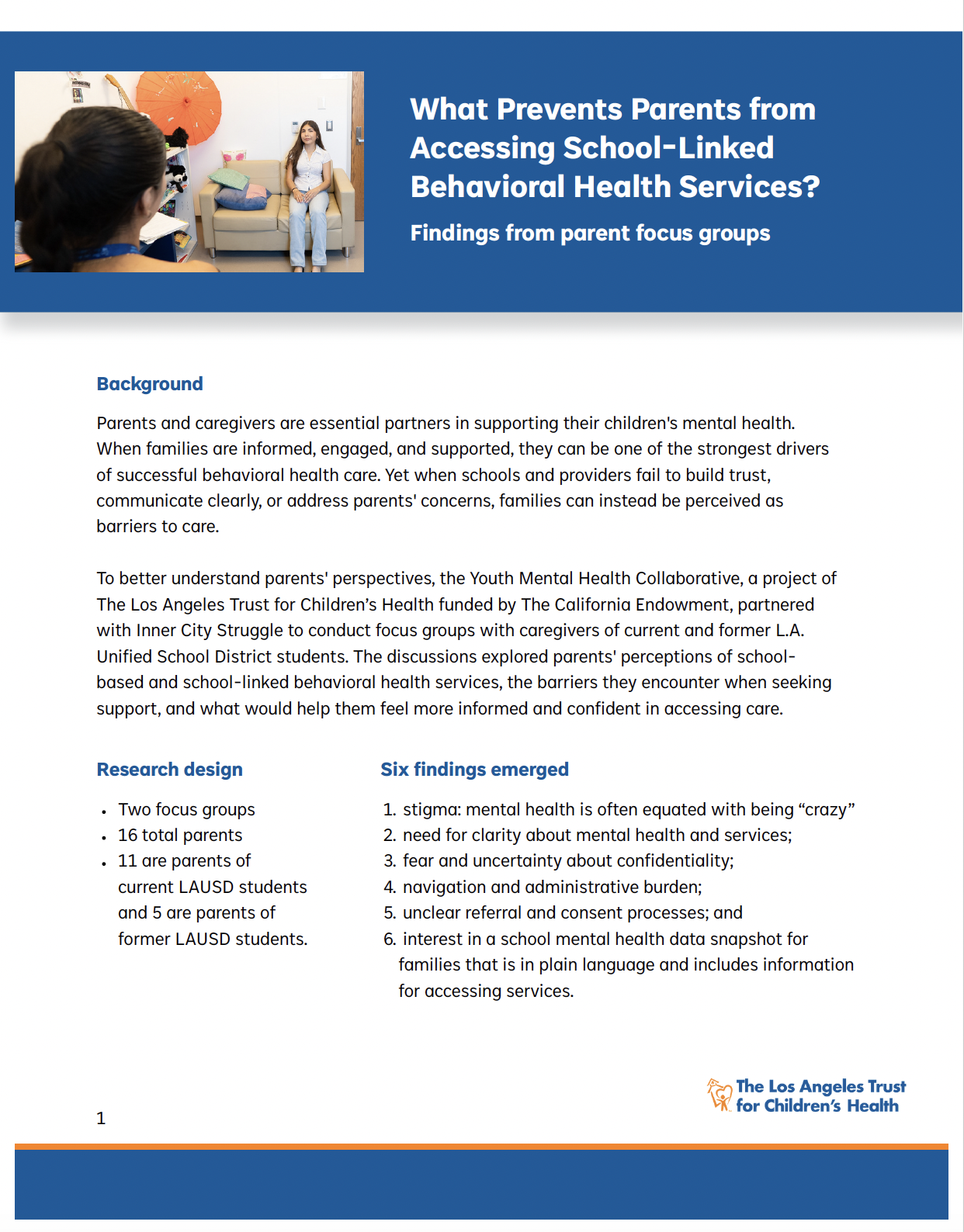
The full findings are available in the Parent Focus Group Report.
In July, members of the Youth Mental Health Collaborative met to review the findings and begin developing potential solutions to the identified barriers. Participants explored ideas ranging from expanding caregiver education (provided alongside childcare, extracurricular activities, and other valuable incentives) to addressing policies that unintentionally create fear or discourage families from seeking care. As one member said, “parents are not the problem—systems are.”
As the Youth Mental Health Collaborative continues its work, these insights will help shape conversations about where collaborative action could have the greatest impact.