How will Medicaid cuts impact school-based healthcare?
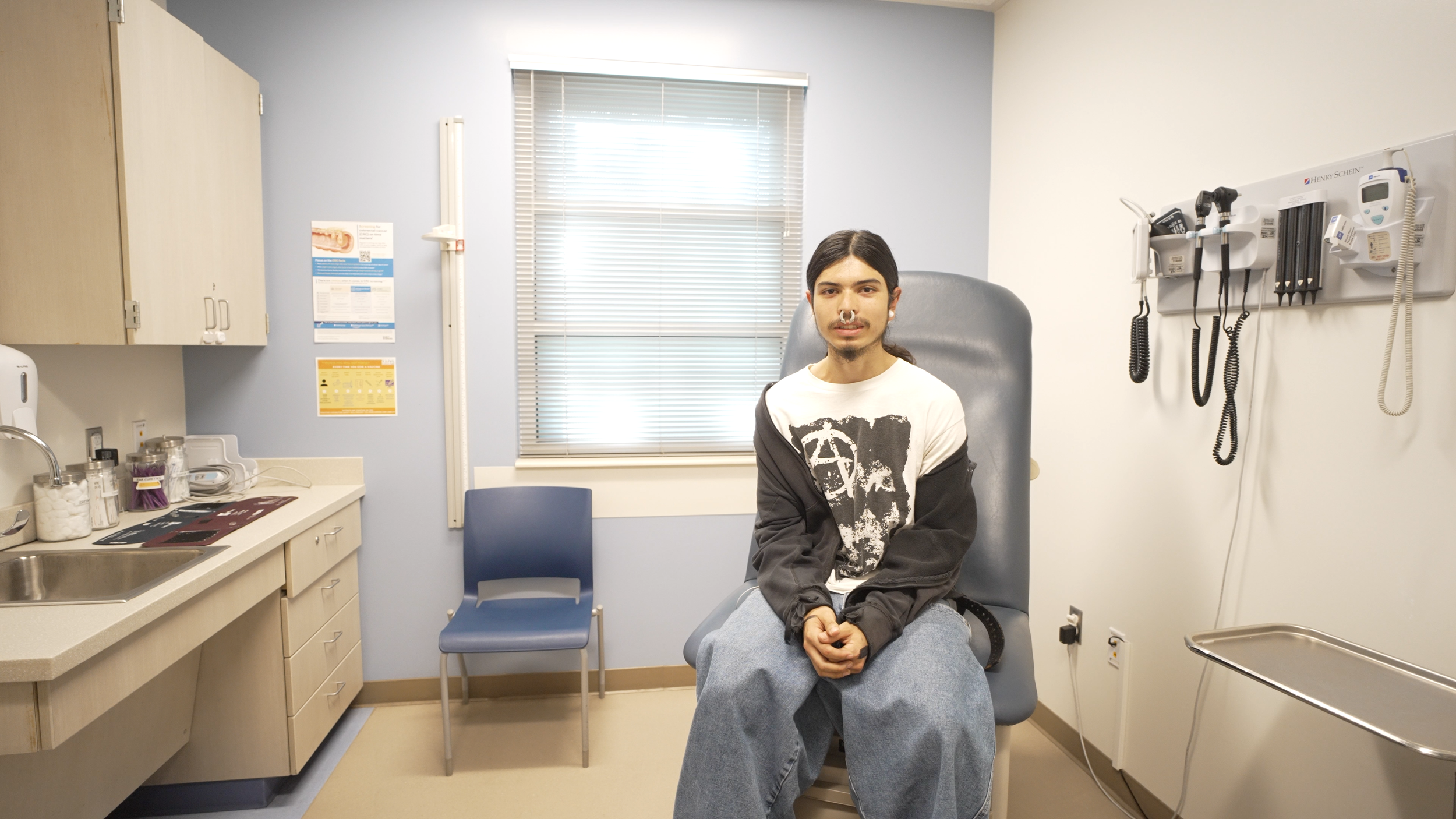
A Manual Arts High School student visits the wellness center
Medicaid (known as Medi-Cal in California) is the financial backbone of school-based healthcare. Care includes physical, behavioral, and oral health services delivered by school health staff, school-based health centers (SBHCs), and community providers. As California begins phasing in federal Medi-Cal cuts, school health systems are grappling with what coverage loss and system strain will mean for student health.
Passed in July 2025, the federal budget reconciliation bill (H.R.1) cuts almost $1 trillion in Medicaid funding over the next decade. Because Medicaid is an entitlement program, which means the government is required to cover anyone who qualifies, Congress achieved cuts by changing eligibility. Changes include making some legally present humanitarian immigrants ineligible, adding work requirements, and requiring twice-yearly eligibility redeterminations. California estimates these provisions could push more than 3 million Medi-Cal members, nearly 20%, out of the program. Additional provisions, such as limits on state financing and new restrictions on Covered California, will reduce care options and strain the state budget.
When adults lose coverage—children suffer
While work requirements and six-month redeterminations apply only to adults over age 19, entire families will be impacted. For example, adults with children are exempt from work requirements—but if your children are over 13, they apply to you. Research shows that when parents have health coverage, children are more likely to be covered, access care, and experience greater financial stability—reducing levels of toxic stress that harm long-term health and development. Keeping adults connected to care is a children’s health issue.
Coverage rollbacks and immigration enforcement threaten health
California is the first state to extend state-funded Medi-Cal coverage to undocumented residents of all ages, improving health outcomes for non-citizen children. Despite this progress, the enacted 2025-26 State Budget freezes new enrollment for undocumented adults and applies a $30 monthly premium. Balancing the budget on the backs of immigrant communities is a dangerous strategy. Nearly 20% of LA County residents are undocumented or living with an undocumented family member, and 1 in 5 children under 5 has at least one undocumented parent. Restrictions on health coverage, combined with aggressive immigration enforcement, pose serious risks to family and community health.
Coverage cliff threatens financial viabilityof school-based healthcare
These coverage losses don’t just affect individual families—they directly undermine the financial foundation of school-based healthcare.
1 in 3 LA County residents are covered by Medi-Cal, including 60% of all children under 18. The UC Berkeley Labor Center projects that 1.1 million LA County residentscould lose coverage due to H.R.1 and the 2025–26 state budget—roughly one-third of current enrollees. This would significantly reduce the number of insured students for billing. A 2025 national survey of 1,400 school district leaders about the impact of Medicaid cuts: 80% expect reductions and layoffs of school health staff, and 70% expect reductions in mental and behavioral health services. Community Health Centers, which support many SBHCs, face additional losses from state budget changes that could reduce clinic revenue by up to one-third. This may force already thin-margin SBHCs to close.
For students, this may mean fewer available services, longer wait times, and reduced access to community providers. Without policy intervention, school-based healthcare and student access will suffer.
Mobilizing to protect families from harm
These cuts follow years of investment and innovation in school health. While they threaten to slow progress, the systems and partnerships to support students remain.
Schools continue to be a critical access point for care. Now more than ever, LA County schools must maximize Medi-Cal reimbursement. And state and local governments must act now to fill budget gaps and mitigate the coverage cliff.
State policymakers should:
Increase state revenue to fill gaps. The Fight for Our Health Coalition is working with the legislature to achieve this.
Maintain coverage for lawfully present immigrants and the state-funded population.
Fund and leverage Community Health Workers and Navigators to help keep people connected to care.
LA County should:
Explore revenue options to fill gaps, such as Measure ER.
Maximize resources through inter-agency integration.
Schools and school-linked providers should:
Implement the statewide multi-payer fee schedule that facilitates billing for school-linked behavioral health services.
Utilize the dyadic services benefit, which provides behavioral health services to the parent or caregiver and child together but only the child’s Medi-Cal is billed.
To stay engaged in efforts to protect school-based healthcare, join the School Health Policy Roundtable mailing list.
Understanding Measure ER and its impacts on school health
Due to federal Medicaid cuts and California’s coverage restrictions for undocumented adults, 1.1 million LA County residents—nearly one-third of enrollees—could lose coverage by 2028, jeopardizing the health of students, their families, and the school-based systems that support them.
In response, the LA County Board of Supervisors has advanced Measure ER, a June ballot proposal to create a temporary sales tax to stabilize the local health safety net. The plan would allocate up to 45% of revenue to care for uninsured residents and 4% specifically for school-based health programs.
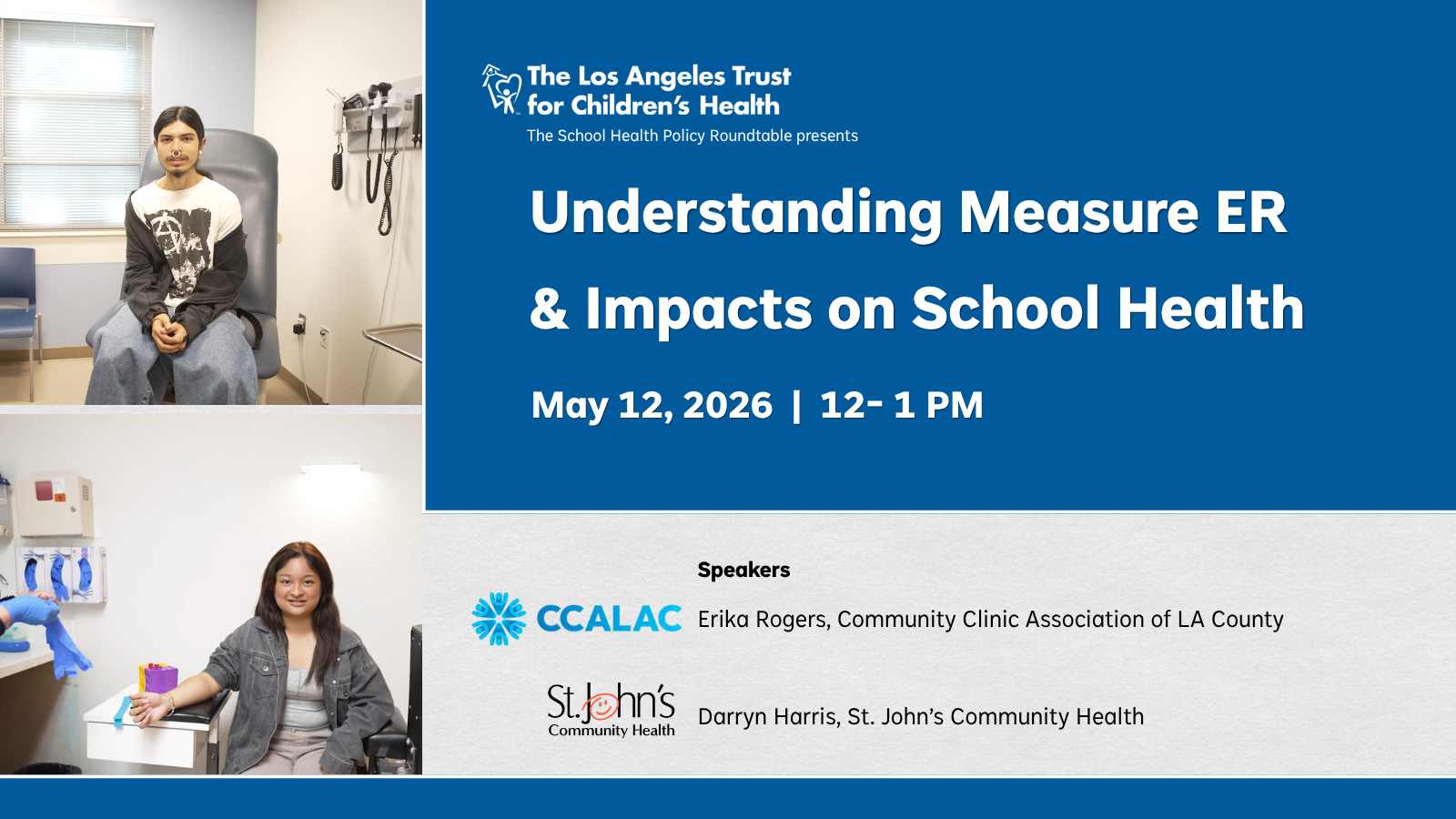
The L.A. Trust School Health Policy Roundtable, in collaboration with the Community Clinic Association of LA County and St. John’s Community Health, invites you to a learning session to understand Measure ER and what it means for schools and communities.
Tuesday May 12th | 12 – 1 PM
Register Here